With Twins
No. 30Will the Room Still Work After Bedtime?
We used to judge a hotel room by whether the twins could sleep in it. We forgot to ask what happened to the rest of us once they did.
By Armon & Linda · August 2026 · Editorial notes
We solved the children's sleep first
For a long time, that was the entire question.
Can the twins sleep here?
We co-sleep at home, so a standard hotel bed isn't a practical solution for them. It is high off the floor, and neither of us is interested in spending the night wondering whether somebody is going to roll off it.
Rollaway beds didn't really solve the problem either. They cost extra, aren't particularly comfortable and still don't give us the sleeping setup we wanted.
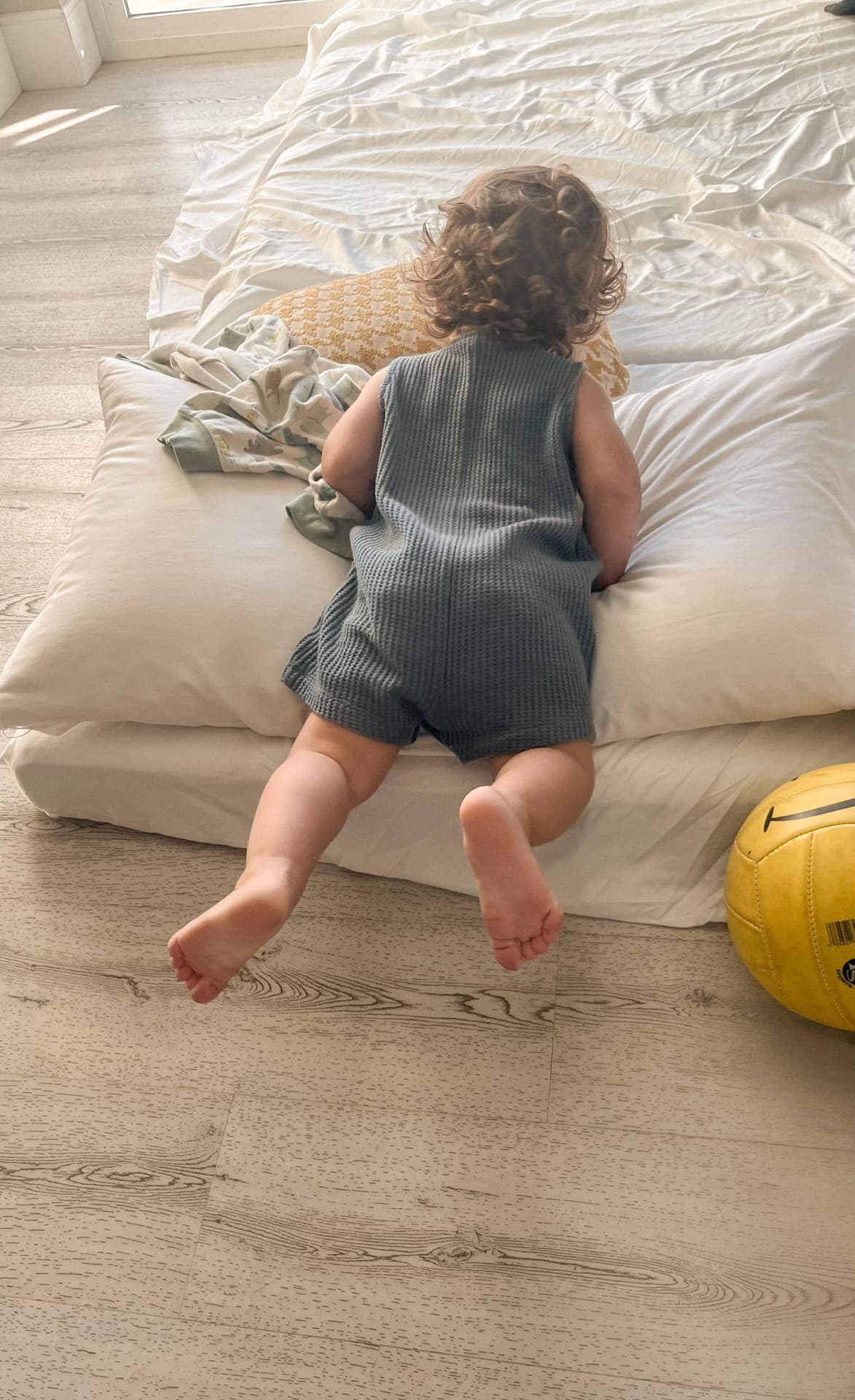
Eventually we started traveling with a Japanese floor bed from Zonli.
It is enormous.
Armon would like the record to reflect that it occupies enough of the car that he would very much enjoy finding a smaller alternative — preferably one that also allows him to use the rearview mirror.
But it works.
Both kids fit.
The cotton cover is washable.
It goes directly on the hotel-room floor.
And most importantly, the twins recognize it.
Different city. Different hotel. Different room.
Same place to sleep.
That consistency has earned the floor bed an absurd amount of cargo space.
Then they fall asleep
And this is the part we somehow didn't think through.
We spent so much energy figuring out where the kids would sleep that we forgot to ask:
Where are we going to be?
In a standard hotel room, the answer is often…right there.
With them.
Lights low or completely off.
Voices down.
Television barely audible, if it's on at all.
Armon occasionally goes to the gym.
Sometimes we manage a movie.
But there is a very particular comedy to paying for a nice hotel room and then sitting silently in the dark because two tiny people are asleep ten feet away.
We have done it plenty of times.
We would prefer not to make it our permanent system.
We used to judge the room by whether the kids could sleep in it. Now we're starting to judge it by whether we can still use it after they do.
Our room criteria are changing
We haven't historically booked rooms around what happens after bedtime.
Moving forward, we will.
A balcony suddenly has enormous value.
Not because we need a beautiful place to drink wine while watching the sunset — although nobody is objecting to that.
Because it gives us somewhere to sit.
A suite with a door does the same thing.
Put the kids down. Close the door. Take the monitor with us. Talk at a normal volume. Watch something. Eat the dessert we didn't want to share.
The monitor may be slightly ridiculous considering both of us would hear one of the twins cry from approximately three counties away.
We will bring it anyway.
Square footage doesn't tell the whole story
A large room can still work badly.
A smaller room can work surprisingly well.
What matters is how the space divides.
Is there enough uninterrupted floor for the bed?
Can we move furniture if necessary?
Are there lamps or tables directly beside the sleeping area that need to be relocated?
Can we still reach the bathroom without navigating an obstacle course?
Can one adult move around after bedtime without waking everyone?
And increasingly:
Is there somewhere on the other side of a door?
These are the things we want to document in our hotel stays because they are difficult to understand from a room's square footage on a booking page.
Five hundred square feet sounds wonderful.
Five hundred square feet with nowhere to go after 8 p.m. is still one room.
Blackout matters. So does everything before blackout.
A dark room helps.
Quiet helps.
A familiar sleep space helps.
But we have also learned that hotel sleep begins well before bedtime.
We try to give the twins time to understand the room before asking them to sleep in it.
Their things come out.
Snacks get put away.
The floor bed appears.
They explore.
We show them where everybody is sleeping.
The room stops being unfamiliar.
Then we go do something.
By the time we come back for bedtime, we aren't introducing them to a strange room and immediately turning off the lights.
We're coming back to our room.
That distinction is small.
With toddlers, small things aren't always small.
We are still figuring this one out
There are parts of traveling with twins where we now have a genuine system.
This isn't one of them.
We know how to get everyone to sleep.
We know what we bring.
We know how to set up the room.
What we're learning now is that a hotel room has to work for four people, not merely provide somewhere for two children to sleep.
So on future stays, we're going to pay considerably more attention to balconies, doors, room layouts and where the adults can exist after bedtime.
The twins getting a good night's sleep is still the priority.
We'd just also like to remain conscious while it happens.
Related reading
If this was useful
- What Earned Its Place in the Bag
What still travels with us, and what stopped coming.
- The Walk to the Room
How the room gets set up before anyone tries to sleep in it.
- The Westin South Coast Plaza with toddlers
A stay where the room layout did most of the work.