With Twins
No. 31The Nap Is the Itinerary
With twins, the nap isn't something we fit into the day. It's the thing the day is built around — and once we accepted that, the rest of the trip got better.
By Armon & Linda · August 2026 · Editorial notes
We didn't set out to build a system. We set out to take a trip, and the trip made it obvious that we needed one. With twins, the nap isn't a gap in the day you schedule around. The nap is the itinerary. Everything else gets arranged on either side of it.
The alternative, which we tried, is squeezing travel around two overtired kids. That doesn't make you better travelers. It gives you two overtired kids somewhere prettier.
Ojai is where it clicked
Our stay at Ojai Valley Inn was one of the first trips where the whole thing came into focus. Armon had a small shock to the system: traveling with very young twins meant the vacation day effectively ended at 7 p.m. At that age, seven meant bath, bottles, the routine, lights out. Before kids, six o'clock in the evening on a trip still felt like an open question. You could decide then what the rest of the night was going to be.
With two kids who need to be asleep at seven, daylight suddenly has a price on it. Which made the middle of the day feel enormous. If the twins woke up around 1:30 or 2, we wanted the whole rest of that afternoon — not only for them, honestly for us too.
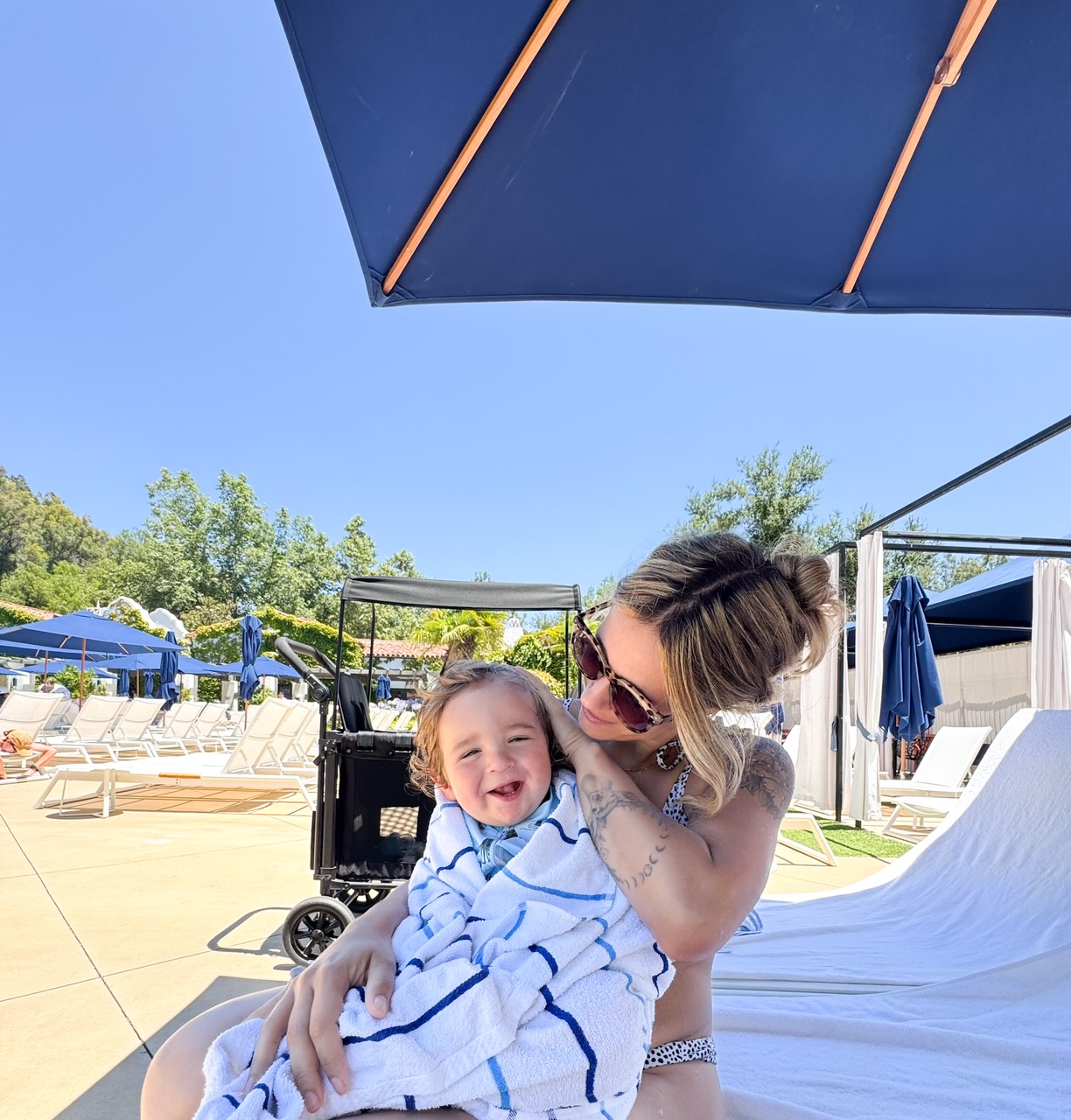
At Ojai, getting the nap right meant they woke up ready. Lunch by the Pixie Pool, swimming, running around, an afternoon that actually felt like the reason we drove up there. That was the moment the math changed for us. Protecting two hours in the middle of the day wasn't costing us vacation. It was buying back the rest of it.
Protecting two hours in the middle of the day wasn't costing us vacation. It was buying us the rest of the day.
The schedule started long before we ever traveled
Linda is the reason any of this works. From essentially the beginning, she kept the twins on the same schedule. When one woke to eat as a newborn, she woke the other. One ate, the other ate. One went down, both went down. As they grew, if one was ready for a nap, nap became the plan for both.
They are different sleepers and very different kids, but keeping the overall rhythm synchronized is what made life with two babies manageable. Linda jokes that at this point they do practically everything on the same schedule, down to pooping at the same time.
When we started traveling, we had no interest in dismantling the routine that was making everything else work. So travel happened around their schedule instead of the other way around.
Worth saying plainly: Linda has never had a singleton, and she'd be the first to tell you that. We can only speak to our twins. With two children the same age, some of the usual travel-nap workarounds simply weren't realistic for us — holding one sleeping baby through lunch is one thing, coordinating two sleeping babies in an unfamiliar place is a different problem entirely. This is what worked for our family. It is not a prescription for yours.
Sometimes protecting the nap means preventing the nap
One of our twins falls asleep in the car far more easily than the other. Through trial and error we've learned that a car-to-room transfer usually only works for us if they fell asleep within roughly the last ten minutes of the drive. If they've already slept twenty or thirty minutes in the seat, transferring them means the nap is over. That's it. That was the nap.
So sometimes Linda's job in the back seat is absurdly specific: keep everybody awake. She's talking to them, playing games, handing things over, sometimes literally blowing on a face. Anything to stop one twin from slipping into a badly timed twenty-minute car nap five minutes before we arrive somewhere they could sleep properly.
It is not dignified. It works.
We want the hotel room to feel boringly familiar
Nap time in a hotel should not feel exciting. Exciting is the enemy. We try to reproduce the cues they already know from home as closely as we reasonably can.
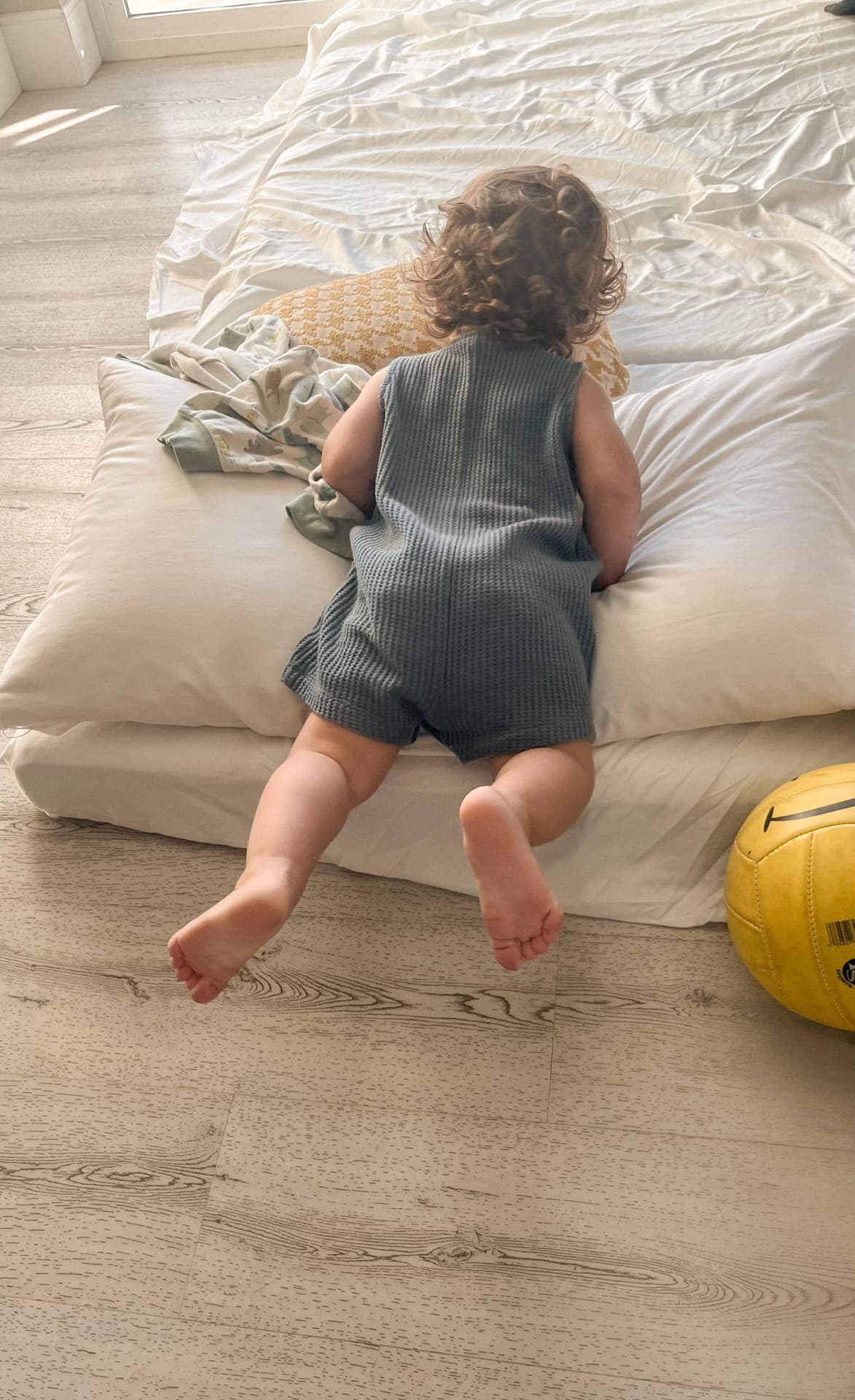
That includes the large floor bed we bring and have now used on trip after trip. We rearrange the room around it. We close the curtains and use whatever room-darkening the hotel gives us. The bed itself has become familiar to them — they know what it means when it goes down on the floor.
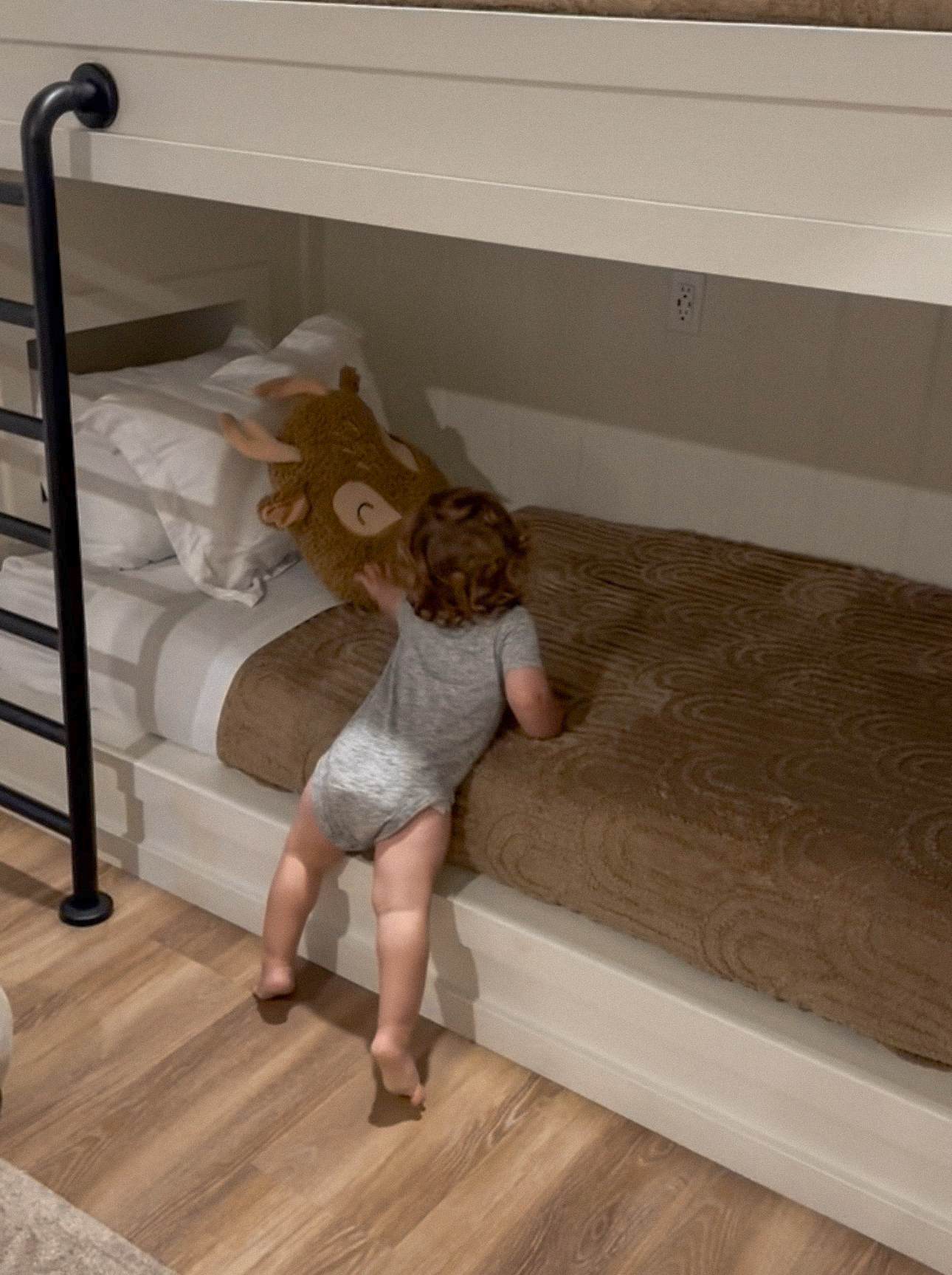
Armon handles most of the operational side: bottles ready, bottles washed when they need washing, milk, handing one twin to Linda or feeding the other himself, and putting on the same Pandora sleep station we use at home. None of this is glamorous. That's exactly why it works. The goal is to make falling asleep on the road as uneventful as possible.
The other benefit shows up after the trip. When we come home, we generally haven't blown up the routine there either.
Two kids, one nap window
The biggest advantage of keeping them synchronized is that nap becomes actual downtime. When they were babies that mattered enormously — Linda was pumping at the time, and both babies sleeping at once was the window to pump, eat something, drink water and reset.
Traveling now, that window is where both of us regroup before the second half of the day. Sometimes one twin wakes before the other. When that happens Armon takes the awake one away from the sleeping area if the room allows it — another corner, a book, something quiet — so the other can finish.
The system isn't perfect. It just means we have a plan when it goes sideways.
What the day looks like now
This has gotten easier as they've gotten older. They're two now, on one midday nap. The rhythm is roughly: morning from around 6:45 or 7 until 11:30 or noon, then nap, then a second block of the day that starts around 2:30 or 3 and runs into the evening.
The nap length varies, and we're not going to pretend otherwise. Linda would call it an hour and a half to two hours. Armon has watched it stretch to three. It depends on the day, the drive, and how much running around happened that morning. The clock isn't the point. The point is that one nap divides a travel day into two usable halves.
Sometimes we break our own rule
On a recent trip to Newport Beach we let them stay up until around ten. For kids whose night normally ends much earlier, that was wild. It was also a great time. Everyone had fun.
The next day was not great. Cranky, needed extra sleep, a very clear reminder of why the routine exists. And we'd still make that trade sometimes. The nap being the itinerary doesn't mean we refuse to break the routine. It means we know what it costs. If something genuinely special is happening, the next day's crankiness can be worth it. We're just less interested in paying that price for no reason.
The other half of the equation
Linda would point out that sleep isn't the only thing helping our twins travel well. We keep giving them familiar, nutritious meals and snacks on the road, with plenty of room for what she calls fun foods. We're not going to tell anyone how to feed their kids. We'll only say what we've noticed: when ours are rested and well fed, they handle unfamiliar surroundings much better.
Why we protect it
When you travel with very young children, and especially with two of them, the amount of usable family time in a day suddenly feels finite. Our nights used to end at seven. We can stretch them a little later now. The instinct hasn't changed: we want to maximize the hours when everyone is awake enough and happy enough to enjoy the place we came all this way to see.
That's the whole reason we protect the nap. Not because we want to spend a vacation sitting in a dark hotel room. Because we want the hours after that dark hotel room to be good.
We stopped trying to squeeze more into the day and started protecting the part that made the rest of the day possible.
Related reading
If this was useful
- Ojai Valley Inn
The stay where this system became obvious
- Will the Room Still Work After Bedtime?
What happens in a hotel room once the lights go out
- What Earned Its Place in the Bag
Including the floor bed we keep hauling around